Relief Compass Helping Coordinate Venezuela’s Earthquake Response
How a deployment built to support one CORE partner became the shared coordination system for a five-organization relief effort.
On June 24, 2026, two earthquakes struck Venezuela within 39 seconds of each other: a magnitude 7.2 quake followed by a magnitude 7.5 mainshock, centered roughly 100 miles from Caracas. The earthquakes killed more than 1,900 people, injured over 10,500, and displaced tens of thousands more across Caracas, La Guaira, and the surrounding states. Hundreds of buildings collapsed outright, and tens of thousands more sustained damage, including homes, hospitals, schools, and roads.
CORE responded because the need on the ground was so severe and they had a trusted local partner that allowed them to move quickly. CORE has partnered with the Wayuu Taya Foundation in Venezuela since 2019, a relationship built through the foundation’s president and CORE’s leadership. That standing partnership let CORE act fast once the scale of the need was confirmed. As a part of their response, CORE sent a member of the Relief Compass team to help CORE’s small on-the-ground team (three people total) run Relief Compass for its own resource distribution, debris removal, and camp assessments. The trip was planned for two weeks. It ran five, because the need, and the role Relief Compass ended up playing, grew far beyond the original plan.
As the Wayuu Taya Foundation stood up a new warehouse in Caracas to receive donations from five separate partner organizations, it was leaning on scattered spreadsheets, different people tracking overlapping work in separate files, inconsistent logins, and a Google Sheet that only covered contacts, not inventory. “There was a ton of redundancy in the work,” Carla, Relief Compass Team Member explained. “You’d have two people doing similar jobs, and they’d each have their own separate spreadsheets.” The problem was also structurally different from what Relief Compass was originally built for. Wayuu Taya also needed to track incoming goods from five distinct donor organizations and report outbound distribution back to each donor individually. Relief Compass had already been built with a collaboration module for exactly this kind of multi-partner reporting, but until Venezuela it had only been used to run a single organization’s operations in the field. This deployment became its first real-world test.
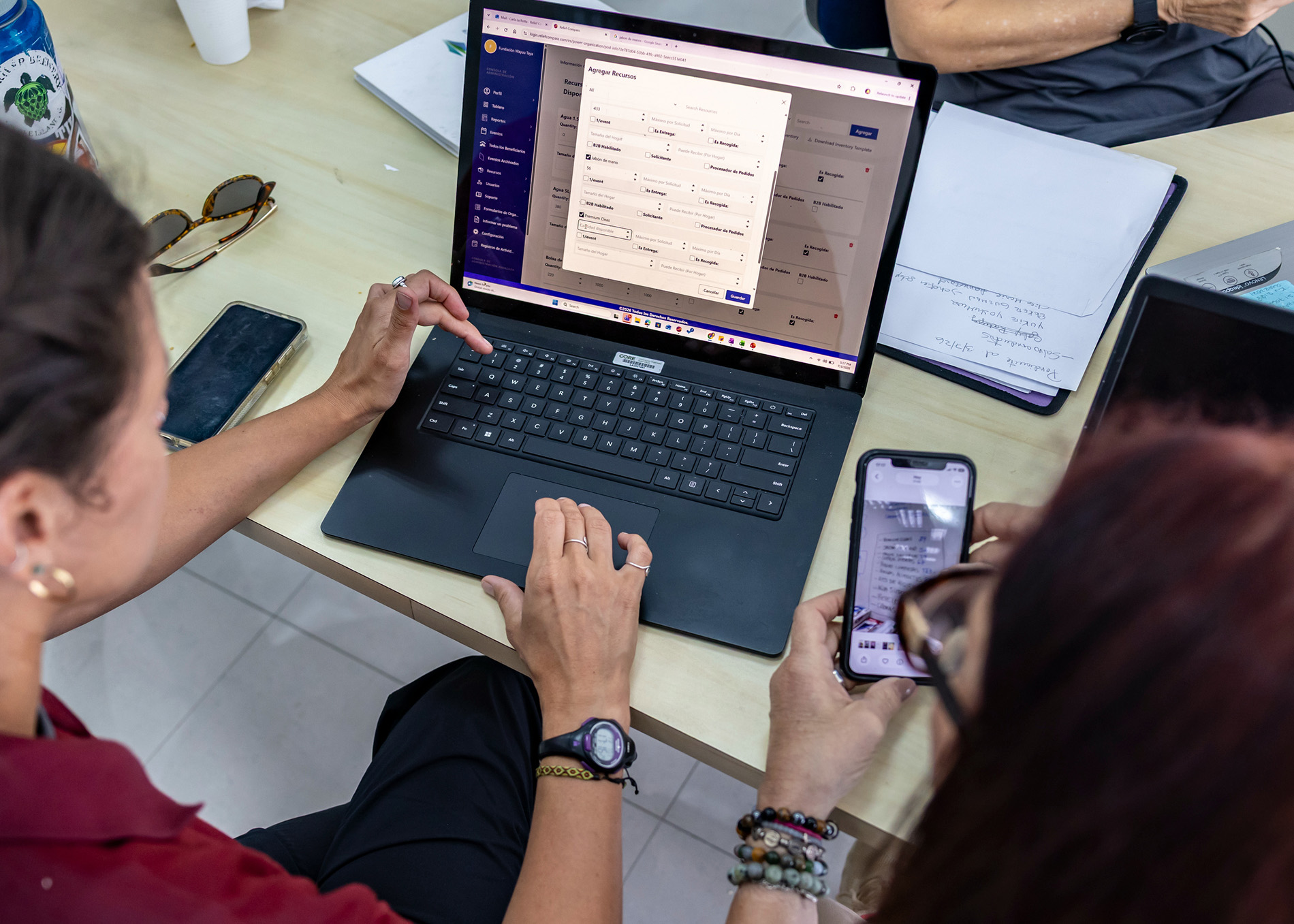
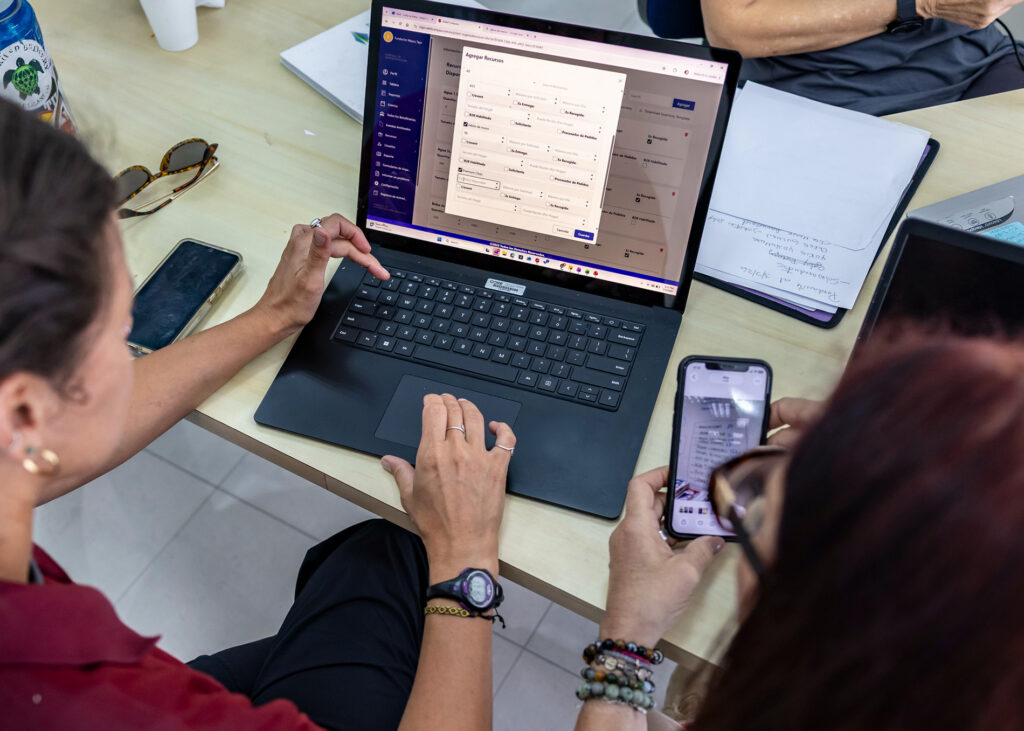
Relief Compass’s assessment and mapping data surfaced damage that wasn’t visible from outside, apartment buildings still standing but structurally unsafe inside, and showed, geographically, which populations had received support and which hadn’t. That mattered: aid organizations tended to cluster around the same highly visible sites, while other displaced groups on the outskirts went without. “With Relief Compass and understanding where items are actually being distributed,” Carla said, “you can showcase that there are areas we’re maybe not focusing on that need more support.” Wayuu Taya now also holds a complete, organized record of a five-week, five-partner operation, ready for donor reporting and coordination with bodies like OCHA, without reconstructing what happened after the fact.
Wayuu Taya plans to keep using Relief Compass’s warehouse and logistics tools beyond the earthquake response, starting with its ongoing medicine distribution and building toward full case management. Of the other partner organizations Carla introduced to the platform, warehouse management drew the most interest. International responders bring in large volumes of goods and, as Carla put it, often “don’t know what happens to those items afterwards.” What began as support for a single CORE partner became, in five weeks, the coordination layer a five-organization response ran on: the clearest evidence yet that Relief Compass belongs in the standard toolkit for international disaster deployments.
Want to achieve the same success with your organization/agency? Schedule a demo now.